


We tell artists their suffering makes them special. Then we watch them die.
“Flowers for the dead” is a 6-part investigation into the machinery of artistic recognition and the Guilt Economy. This is part 2. (and yes, that’s an Anne Frank reference—Regret is stronger than gratitude—which is why dead people (artists) get more flowers (money) than living.)
Other essays in the series will be linked at the end after they’re published.
It’s October 1962. Her marriage to Ted has collapsed. She’s alone with two small children in a London flat with no heat during one of the coldest winters on record. She’s broke, exhausted, clinically depressed. She wakes at 4 AM every morning—the only quiet hours before the children wake—and writes in a fury.
By February 1963, she has forty new poems. They’re astonishing, raw and unsparing. Some of the most powerful work in the English language. Lady Lazarus. Daddy. Ariel.
On February 11, she puts her head in the oven and turns on the gas.
Yes, that’s Sylvia Plath, who wrote her best poems in the months before she killed herself.


The poems get published two years later. They make her famous. And they cement a story we tell ourselves about artists: the best work comes from the deepest pain. That suffering isn’t just incidental to great art—it’s the fuel.
We have an entire mythology built around this now. The tortured genius. The mad artist. Van Gogh cutting off his ear. Basquiat overdosing at 27. Cobain with a shotgun. Amy Winehouse refusing rehab. We tell these stories so often they stop being tragedies and start feeling like... inevitabilities.
Like this is just how art works.
Pain → authenticity → greatness. A simple equation.
My art mentor once asked me, during a critique: “What hurts you the most?” Not what you’re curious about. What you’re carrying.
Years ago, my kickboxing instructor said something similar. When I couldn’t generate enough power in my kicks, he told me to imagine the bag was my boss. Or an ex I was still mad at. “Channel the anger,” he said. “Use the pain.”
That works for kickboxing. Punching things is quick. Paintings take months. You can’t maintain rage-fuelled intensity while mixing seventeen shades of ochre.
It’s everywhere, this idea. Pain as fuel. Suffering as raw material. We don’t just accept it—we’re taught it. We even have science for it now.
In 2015, a massive genetics study out of Iceland1 analysed 86,000 people and found that those working in creative professions were 17% more likely to carry genetic variants associated with schizophrenia and bipolar disorder. The study made headlines: “Scientists Confirm Link Between Creativity and Mental Illness.” See? The torment is in the DNA. The mad genius isn’t a cultural construct—it’s biology.
Except when you actually read the study, geneticists immediately pointed out a problem. Those genetic variants account for about 0.25% of the variation in people’s artistic ability. David Cutler, a geneticist at Emory, put it this way:
If the distance between me, the least artistic person you are going to meet, and an actual artist is one mile, these variants appear to collectively explain 13 feet of the distance.2
Thirteen feet. Out of a mile.
The other 99.75%? Still a mystery. So if you’re not an artist, you can’t blame your genes. Sorry.
Welcome to Thehraav, a museletter about building an art practice, a life that can sustain it, and just taking a breath.
The distinction we forget
There’s a difference between intensity and suffering. Between productive constraint and destructive suffering.
Productive constraint: You have 100 words to tell a story. You have three colours to work with. You have to finish by Friday. These give you problems to solve within a workable system.
Destructive suffering: You can’t afford to eat. Your mental illness makes it impossible to work. Your chronic pain prevents you from holding a brush. This makes the system itself unworkable.
Great art needs urgency. The ‘tortured genius’ myth confuses urgency with injury.
“But we have the work…”
This is something that makes me uncomfortable because I can’t fully dismiss it.
We have Kollwitz’s war prints. We have Goya’s nightmares painted on plaster. We have Kahlo’s shattered spine in oil paint. We have Plath’s forty poems from the winter of 1962.
The art exists. It’s powerful. And it came from suffering.
So maybe suffering does produce deeper art—not because pain is magical, but because it forces you to confront what comfortable people can afford to avoid.
The case for pain
Käthe Kollwitz was 47 when her youngest son, Peter, volunteered for the German army in World War I. He was 18. He believed in the cause. She let him go even though everything in her wanted to stop him.
He died two weeks later. October 22, 1914. Near Diksmuide in Belgium. Shot in the head leading a charge.
The grief nearly destroyed her. For months she couldn’t work. Couldn’t eat. Couldn’t function. She wrote in her diary:
There is in our lives a wound which will never heal. Nor should it.
But eventually she went back to her studio. And what came out was different from anything she’d made before. The war prints3—The Survivors, The Volunteers, The Parents—they’re unbearable to look at. The weight of them. The way she captures not just grief but the specific quality of a mother’s grief when her child dies for nothing.
You can’t fully replicate that knowledge through imagination alone. You can approach it through empathy, research, observation, craft. But having lived it…that marks the work differently.


Francisco Goya painted the Black Paintings directly onto the walls of his house when he was 72. Deaf, politically exiled, possibly dying. Fourteen murals of nightmares he made for no audience but himself. Would he have made them if he’d been healthy and secure? Probably not.
Frida Kahlo’s work is inseparable from her physical pain—the shattered spine, the failed pregnancies, the unfaithful husband. It’s all there in the paintings. Remove the suffering and you remove the subject matter entirely.
And then Plath. The Ariel poems aren’t just good poems written by someone who happened to be depressed. They’re poems about the depression. About rage. About wanting to die and being terrified of dying. About the gap between the self you present and the self you are.
Lady Lazarus:
Dying
Is an art, like everything else.
I do it exceptionally well.
Daddy:
Every woman adores a Fascist,
The boot in the face, the brute
Brute heart of a brute like you.
The particular voice in Ariel and Lazy Lazarus—that specific urgency, that thinness between living and dying—came from her state. That doesn’t mean stability makes such work impossible. It means Plath’s version of it was tied to Plath’s crisis. Other poets have written about suicidal despair from the distance of recovery. The work is different—because survival edits the voice.
The myth says: mental illness fuels creativity. That’s one interpretation—and probably the wrong one.
It’s not just cherry-picked examples of famous dead artists. When researchers at Sweden’s Karolinska Institute studied 1.2 million patients over 40 years4, they found patterns.
Writers showed higher rates of anxiety, bipolar disorder, schizophrenia, unipolar depression, and substance abuse. Almost 50% more likely to commit suicide than the general population. Dancers and photographers: higher rates of bipolar disorder. The entire group of people in creative professions showed elevated rates of mental illness.
Not everyone. Not all the time. But enough that the pattern is clear. The explanation isn’t.
But why does it feel that this explanation has teeth?
Because market dependency can lead to safe art.
When your income depends on collectors who bought your last style, evolving becomes risky. When galleries want more of what sold, experimentation threatens your livelihood. Comfort isn’t the problem. Dependence is.
There’s something about precarity that clarifies what matters. When you’re about to die, or lose everything, or when nothing else matters because everything is already lost—art made under those conditions has a different urgency. A different honesty.
And let’s be honest about something else: some of the most powerful art in history came from war, oppression, and grief. From people who had no choice but to confront horror. Goya’s The Disasters of War. Otto Dix’s paintings of World War I. Picasso’s Guernica. The entire genre of protest music. The Harlem Renaissance coming out of systemic racism. Art as resistance, as witness, as survival.
You can make pleasant art from a place of security. Pretty paintings. Nice poems. Decorative work. But does it change anyone? Does it break your heart and remake it?
That’s the uncomfortable question at the centre of this. Maybe we don’t want artists to suffer. But maybe we want art that comes from the kind of rawness suffering sometimes forces.
Or maybe we’ve been calling intensity “suffering” for so long it’s become the same word.
What depression actually does
What actually happens in the brain when you try to make art while suffering from clinical depression?
You can’t—not for lack of desire. For lack of machinery.
You stare at the blank canvas. You know you should paint. You want to want to paint. But there’s nothing there. No pull. No drive. No spark. Just exhaustion. Just static. Just the terrible knowledge that you used to care about this and now you don’t care about anything.
You might manage to pick up the brush. You might even make a mark. But it feels like moving through concrete. Every decision takes enormous effort. And the worst part? You can’t tell if what you’re making is good or bad because you can’t feel anything about it. The reward system in your brain—the part that’s supposed to light up when you do something meaningful—is offline.
Neuroscientists have a name for this: anhedonia. The inability to feel pleasure or anticipate reward. There’s something fitting about depression having a clinical term that sounds like a forgotten Greek goddess of joylessness. And it doesn’t just make you sad—it makes you unable to do things.
When researchers study what happens when depressed patients are given tasks that require effort, they consistently choose the low-effort option. Not because they’re lazy. Because their brains can’t generate the neurochemical juice needed to expend effort for a potential reward. The dopamine pathways that drive motivation are dysfunctional5.
This isn’t pain-as-fuel. This is pain-as-shutdown.
Think about what this means for Plath writing Ariel. She wasn’t making great poems because she was depressed. She was making great poems despite being so depressed she could barely function. Despite waking at 4 AM because that was the only time she could force herself to work before the anhedonia fully set in. Despite knowing that the effort of writing was competing with the effort of just staying alive.
The depression didn’t fuel the work. It stole her ability to work. She fought it every single morning. And eventually, she lost.
The mechanism the myth ignores
When researchers look closely at which mental illnesses correlate with creativity, something interesting emerges: it’s not depression. It’s bipolar disorder. And not even full bipolar disorder—specifically hypomania6. The elevated mood state. The racing thoughts, high energy, decreased need for sleep, grandiosity.
That Swedish study that found writers had higher rates of mental illness? It also found no association between unipolar depression and creativity. The link was specific to bipolar disorder and, to a lesser extent, schizophrenia.
A meta-analysis of 57 studies found a small negative correlation between depressive mood and creativity. And a small positive correlation between hypomania and creativity.
One floods the engine. The other kills the spark.
Hypomania gives you energy, confidence, racing thoughts, the feeling that anything is possible. That might fuel creative output.
Depression gives you fatigue, anhedonia, the feeling that nothing matters and nothing will ever matter again. That doesn’t fuel creative output. It kills it.
But we use the same “tortured genius” narrative for both. We talk about Plath (depressed, suicidal) and Basquiat (possibly bipolar, definitely addicted) as if they’re examples of the same phenomenon. They’re not. That’s like saying “weather affects sports” and treating a hurricane and a light breeze as the same condition.
And even for bipolar disorder, when researchers studied bipolar artists receiving treatment7, two-thirds maintained or increased their creative output. Only about a quarter saw decreased productivity.
Treating the severe episodes—the ones that lead to hospitalization, psychosis, bankruptcy, destroyed relationships—didn’t kill their creativity. It gave them the stability to actually finish things.
Mark Vonnegut, son of Kurt, is bipolar himself. He became a paediatrician instead of a writer. He said this: “You can’t look at the paintings of Van Gogh without concluding that there are positive capacities associated with this illness. But those positives are as a result of fighting the illness rather than giving in to it.”
Fighting. Not surrendering.
What if we have causation backwards?
What if creative careers cause mental illness?
Think about what it takes to be a professional artist. Financial instability. Irregular income. No benefits. No job security. Constant rejection. Performance pressure. The need to expose your inner life to public judgment. Irregular hours. Isolation. The cultural message that what you do isn’t “real work.”
When researchers study musicians’ mental health, they find high rates of anxiety and depression. And when they ask why, musicians point to their working conditions: the financial precarity, the performance anxiety, the irregular schedules, the lack of support systems.
Maybe writers aren’t mentally ill because creative people are prone to mental illness. Maybe writers are mentally ill because being a professional writer is mentally destabilizing.
Maybe the correlation exists because creative careers are structurally designed to make people sick. And we survive it as long as we can, and some of us make great work along the way, and then we call it the “tortured genius” and pretend it was inevitable.
So then why do we keep believing it?
If the evidence is this complicated—if depression actually destroys creativity, if we’re confusing correlation with causation, if intensity and suffering aren’t the same thing—why does the myth persist?
Five reasons. None of them good for artists.
1. Confirmation bias
We remember the suffering geniuses and forget the happy ones.
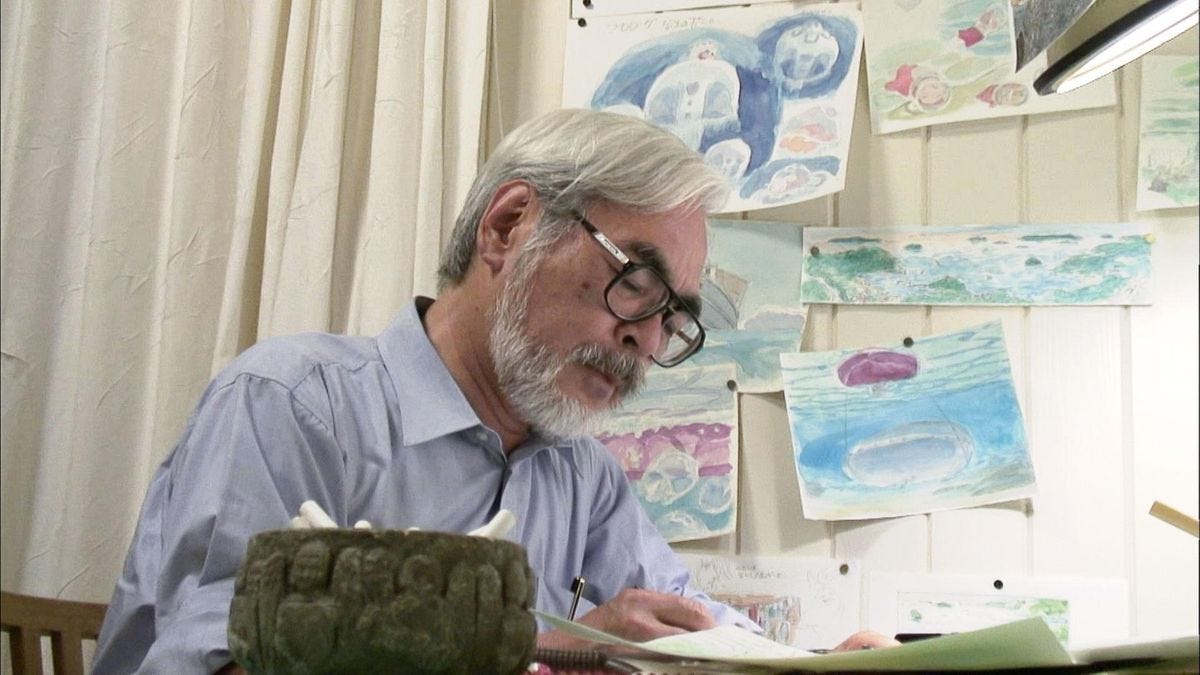
Duke Ellington lived to 74, never seemed particularly tortured, and produced over a thousand compositions. Hayao Miyazaki is 83, still working, describes his creative process as disciplined craft rather than emotional catharsis. Agnes Martin lived to 92, spent her later years in relative contentment, and made some of her best paintings in her seventies and eighties.
But we don’t tell those stories as often. There’s no dramatic arc.
“Artist lives long, makes good work, dies of old age” doesn’t trend for years.
2. Suffering becomes meaningful
If your pain produces great art, then at least it wasn’t for nothing. The depression that makes you want to die also makes you a better writer. The trauma that broke you also gave you something to say. It’s a way to metabolize agony into purpose.
I get it. I’ve done it. When my art mentor asked what I was carrying, I had an answer ready. Because I wanted to believe that the hurt wasn’t wasted. That it could be transmuted into something valuable.
And here’s the thing: this is real. Making art about trauma genuinely helps some people process it. This isn’t a myth—it’s documented in art therapy research. Creative activities reduce symptoms of depression and anxiety. Making art helps people regulate emotions, reduce stress, find meaning in difficult experiences.
The problem is when we treat meaning-making as the only function of art. The only reason people make things.
If art is primarily for processing trauma, then artists need trauma to process. Your pain becomes your material. Your wounds become your career. And healing becomes threatening—if you’re not suffering anymore, what will you make?
But meaning-making only works in retrospect. While you’re in the middle of the suffering, it’s just suffering. Plath didn’t write Ariel thinking “this depression is really enhancing my poetry.” She wrote Ariel because she was a poet and writing was what she did, and then she killed herself because the depression became unbearable.
We make the suffering meaningful after. Once we have the poems. The artist doesn’t get to experience that meaning—only we do.
3. The authenticity economy
In an age of Instagram filters and curated feeds, suffering reads as “real.” Unpolished. Raw. Authentic.
Art that comes from honest reckoning with difficult experience does resonate differently than work that’s purely technical or decorative. Vulnerability is powerful. But we’ve collapsed “honesty about pain” into “pain itself.” We’ve made suffering a prerequisite for authenticity.
And this creates perverse incentives. If suffering makes you authentic, and authenticity is valuable, then you’re incentivized to either suffer more or perform suffering you don’t actually feel. The market rewards your pain. So you give them pain.
The Romantic Artist trope—that 1800s invention of the artist as rebel, outsider, madman—did something similar too. It separated artists from normal economic concerns. “Real” artists don’t care about money. They’re above that. They’re driven by higher callings.
Which means we don’t have to pay them properly. Their poverty proves their purity.
4. It flatters everyone
It flatters artists: You’re not just broke and mentally ill—you’re a tortured genius. The suffering proves you’re real.
The audience gets to call it “depth,” not consumption.
It even flatters people who aren’t artists: You’re too well-adjusted to be creative. Too stable. Too happy. That’s why you have a normal job. And honestly? That’s probably for the best. Look what happened to Van Gogh.
Everyone gets to feel good about themselves. Except the artists of course.
5. It excuses not helping—and rewards those who don’t
This is the ugliest part. And it has two layers.
1: moral permission. If artists need to suffer to create, then supporting them is actually counterproductive. Give them financial stability? You’ll ruin their edge. Get them into therapy? You’ll kill their creativity. Help them out of poverty? They’ll make boring, safe work.
Better to let them struggle. It’s for their own good. For the good of the art.
2: market incentive. A painting by an unknown artist might be worth $5,000. The same painting by an artist with a compelling tragic backstory might be worth $500,000. The suffering is the brand. The early death is the limited edition.
Basquiat’s heroin death made his paintings more expensive. Van Gogh’s suicide and poverty are inseparable from his market value. The tragic story authenticates the work and drives up the price.
And this ties directly back to Part 1: dead artists with tragic stories are safer investments. The myth becomes a closed loop. Self-fulfilling prophecy.
Artists need to suffer → we shouldn’t help them → they stay poor → they die early → their work becomes valuable → we were right, they needed to suffer.
What this really means
Remember the distinction from the beginning? Intensity versus suffering. Productive constraint versus destructive suffering.
Van Gogh didn’t need to be poor. He needed someone to buy his work so he could keep painting. He needed canvas and paint. He needed treatment for his mental illness. He needed a community that valued what he was doing.
His suffering didn’t make the art better. His response to suffering—continuing to paint anyway, continuing to send letters to Theo, continuing to believe the work mattered even when no one else did—that’s what made the art.
Intensity can come from joy, curiosity, rage at injustice, love, obsessive focus on a problem you’re trying to solve.
Suffering might produce intensity. But it’s not the only source. And it’s often the least sustainable source—because it’s the one most likely to kill you before you finish.
What are we rewarding?
Do we want to be a society that supports artists while they’re alive? Or one that valorises their suffering after they’re dead?
Do we want a culture that treats creative work as valuable labour worthy of compensation? Or one that romanticizes poverty as proof of artistic purity?
Do we want systems that help artists survive and thrive? Or ones that extract maximum value from their pain and then build museums to their memory?
The tortured genius myth isn’t just a story about how art gets made. It’s a justification for how we treat artists. It makes their suffering look necessary. Inevitable. Even noble.
And that lets us off the hook.
If Van Gogh needed to be poor and mentally ill to paint Starry Night, then we don’t have to feel bad that he died broke and unknown. We don’t have to question why the system that made him valuable only worked after he was dead. We don’t have to ask what would have happened if someone had just bought his paintings. Or gotten him treatment. Or valued his work while he was alive to benefit from it.
The myth turns neglect into narrative. And narrative is easier to live with than complicity.
Which sets up the question for Part 3: What happens after artists die? How do we consume their suffering? Why does recognition come too late? And what role does guilt play in the posthumous art market?
Other essays in “Flowers for the dead” series:
His madness madness, Her madness money??

PART 1: Comparing the lives and recognition of Van Gogh and Yayoi Kusama to understand why one died poor and unknown and other is rich and famous.
https://www.nature.com/articles/nn.4040
https://hyperallergic.com/213620/icelandic-scientists-find-link-between-creativity-and-mental-disorders/
https://www.moma.org/artists/3201-kathe-kollwitz
https://pubmed.ncbi.nlm.nih.gov/23063328/
https://journals.plos.org/plosone/article?id=10.1371/journal.pone.0006598
https://www.frontiersin.org/journals/psychiatry/articles/10.3389/fpsyt.2021.781961/full
https://pubmed.ncbi.nlm.nih.gov/497639/
What a beautiful piece! This one deserves to reach a lot of people. Really looking forward to the series.
Thanks again for a very interesting post! David Lynch talked about exactly this a lot - there are a lot of snippets on YouTube, if you're interested.